
Inline Viscometer
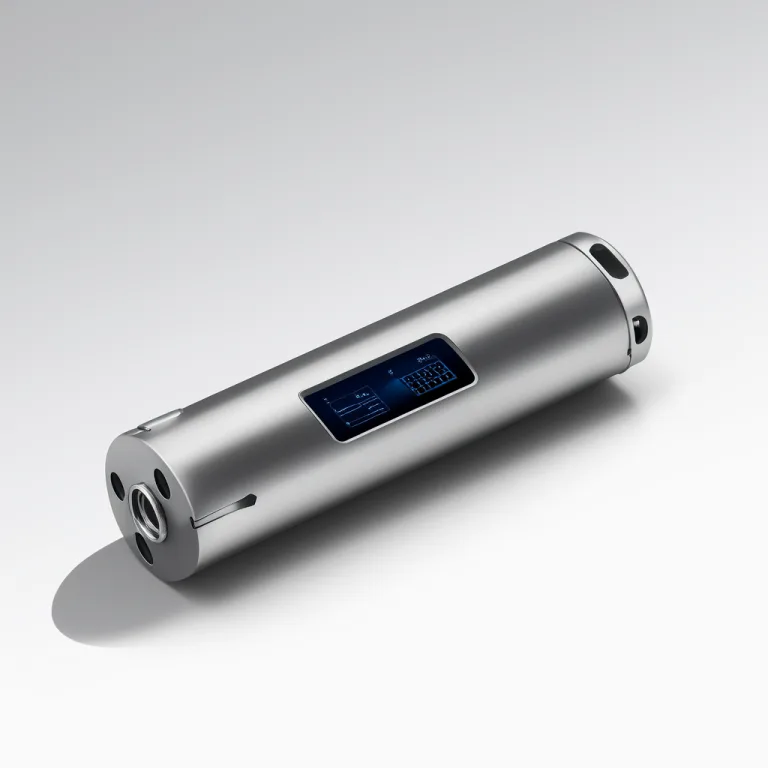
Inline Viscometer for industrial applications.
About Inline Viscometer
Inline Viscometer for industrial applications.
| Domain | electrical |
|---|
Who Works With Inline Viscometer?
9 engineering roles are connected to Inline Viscometer based on verified research evidence.
Maintenance Technician
Field Service Engineer
Instrumentation Technician
Sensor Technician is a widely recognized occupational title in industrial automation, particularly within instrumentation and control systems. While 'Sensor Technician' explicitly references the product (sensors), it maps directly to the standardized role 'Instrumentation Technician'—a core profession in process and automation engineering that specializes in calibration, maintenance, diagnostics, and integration of field devices including proximity, temperature, and pressure sensors. Evidence from Glassdoor job postings confirms responsibilities aligned with sensor lifecycle support in automation contexts.
Process Engineer
Beverage Process Engineer is a recognized engineering role specializing in process design, validation, and compliance for beverage manufacturing systems. While 'Beverage' denotes industry context (not product-specific specialization), the role directly engages with ribbon blenders — particularly in specification, commissioning (including IQ/OQ), CIP/SIP integration, and 3-A sanitary validation — all cited in job listings. 'Process Engineer' is the canonical, general professional title; 'Beverage' reflects domain application, not an inseparable part of the core role definition.
Validation Engineer
Validation Engineer is a well-established professional role in regulated industries (e.g., pharmaceuticals, chemicals, food & beverage), responsible for verifying that equipment and systems perform as intended under specified operating conditions. In the context of cartridge filter housings for corrosive chemical plant environments, this role directly engages in validation protocols — including design qualification (DQ), installation qualification (IQ), operational qualification (OQ), and performance qualification (PQ) — to ensure compliance with safety, material compatibility, and filtration integrity requirements. The evidence confirms validation activities are explicitly referenced alongside specification and inspection for this product.
Technician
Technician is a widely recognized professional role in HVAC engineering, explicitly referenced in ASHRAE guidance for cooling tower systems. While generic, it denotes a credentialed, hands-on technical role responsible for installation, commissioning, operation, inspection, maintenance, troubleshooting, and testing of HVAC equipment including cooling towers. It is not product-specific (e.g., no 'Cooling Tower Technician' prefix), so product_specific_title = false. The role is distinct from engineers or operators and falls under the Maintenance family with broad technical execution responsibilities.
Training Specialist
Customer Trainer is a recognized professional role in industrial automation, especially for HMI/Operator Interface products where end-user competency directly impacts safe and effective operation. Rockwell Automation explicitly references 'HMI Panel Technician' roles supporting field service and customer training, confirming that training delivery to customers is a formalized function tied to product deployment. While 'Customer Trainer' contains a stakeholder descriptor ('Customer'), it denotes a distinct job function — designing/delivering technical training on how to operate, navigate, and troubleshoot HMIs — and is widely used as a title (e.g., Siemens Customer Training Engineer, Schneider Electric Training Consultant). It generalizes to 'Training Specialist' (a canonical HR/ATS-recognized role) with specialization in automation; no product-specific prefix (e.g., 'HMI Customer Trainer') is present, so product_specific_title = false.
Application Engineer
Application Engineer is a widely recognized professional role in industrial equipment domains, especially for process-critical machinery like ribbon blenders. In the beverage and food-grade context, application engineers bridge technical specifications with client process requirements — advising on equipment selection, integration, validation (e.g., mixing uniformity, cleanability), and troubleshooting. The evidence explicitly states they are part of the technical support team with food-grade system expertise, confirming their functional involvement across specification, commissioning, and support lifecycle stages.
Systems Integration Engineer
MES/ERP Integration Specialist is a recognized role in industrial automation, focused on connecting shop-floor equipment (e.g., belt conveyors with VFDs and sensors) to higher-level manufacturing and business systems. While 'MES/ERP Integration Specialist' is a common industry title, the canonical professional role is more accurately generalized as 'Systems Integration Engineer' — a widely accepted engineering discipline under Automation & Control Engineering. The role directly relates to specifying integration requirements, installing/configuring interfaces, commissioning data flows, and testing connectivity for conveyor control systems.