
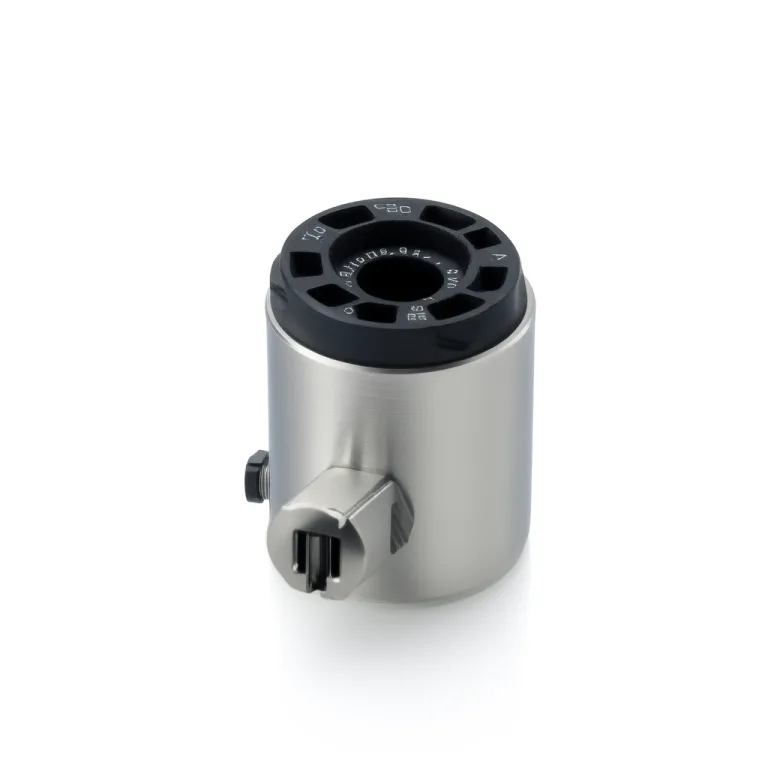
Electrochemical Gas Sensor
Electrochemical Gas Sensor for industrial applications.
About Electrochemical Gas Sensor
Electrochemical Gas Sensor for industrial applications.
| Domain | electrical |
|---|---|
| Product Family | Sensors |
Who Works With Electrochemical Gas Sensor?
8 engineering roles are connected to Electrochemical Gas Sensor based on verified research evidence.
Field Service Technician
Field Service Technician is a widely recognized professional role in industrial automation, specifically tasked with on-site deployment, commissioning, diagnostics, preventive/predictive maintenance, and repair of motor drives including VFDs. The role is standardized across OEMs (e.g., ABB, Danfoss, Siemens) and aligns directly with the product context of variable frequency drives used for motor speed/torque control. While specialization in drives may exist, 'Field Service Technician' itself is not product-specific — it's a canonical, cross-domain role.
Applications Engineer
Applications Engineer is a well-established professional role in industrial equipment sectors, especially for process machinery like ribbon blenders. In the beverage context, they bridge technical capability and customer process requirements — advising on blender selection, configuration (e.g., material of construction, drive type, explosion protection), integration into production lines, and operator training. The evidence explicitly links them to ribbon blender support (installation, FAT/SAT, training), confirming functional relevance.
Test Technician
Dew point verification is a specialized test activity critical for validating dryer performance in compressed air systems; while 'dew point verification specialist' is not a widely standardized job title, it describes a practitioner performing calibrated moisture measurement and compliance verification — functionally aligned with Test Technician (especially HVAC/industrial gas systems), with specialization in dew point metrology. The role directly relates to commissioning, inspection, and performance testing of compressed air dryers.
Research and Development Engineer
R&D Engineer is a widely recognized professional role in engineering domains, including automation and mechanical test equipment. In the context of torsion testing machines, R&D Engineers contribute to design innovation, performance validation (e.g., compliance with ASTM E143/ISO 7800), and specification of functional requirements. The evidence confirms collaboration with QA and involvement in calibration and system operation — aligning with DESIGN, TEST, and SPECIFY relationships. 'R&D' is a standard functional specialization, not product-specific.
Design Engineer
Technician
Technician is a widely recognized professional role in HVAC engineering, explicitly referenced in ASHRAE guidance for cooling tower systems. While generic, it denotes a credentialed, hands-on technical role responsible for installation, commissioning, operation, inspection, maintenance, troubleshooting, and testing of HVAC equipment including cooling towers. It is not product-specific (e.g., no 'Cooling Tower Technician' prefix), so product_specific_title = false. The role is distinct from engineers or operators and falls under the Maintenance family with broad technical execution responsibilities.
Electrical Engineer
Sensor Engineer
HVAC sensor engineer is a domain-specialized variant of the recognized professional role 'Sensor Engineer', with documented emphasis on thermal sensing (including heat flux sensors), HVAC system integration, calibration, and ASHRAE compliance. While 'HVAC' denotes application context, the core function—designing, specifying, testing, and integrating sensors—is consistent with the broader Sensor Engineer role. The specialization is genuine and industry-attested, but the canonical form abstracts away the product/application prefix per guidelines.