
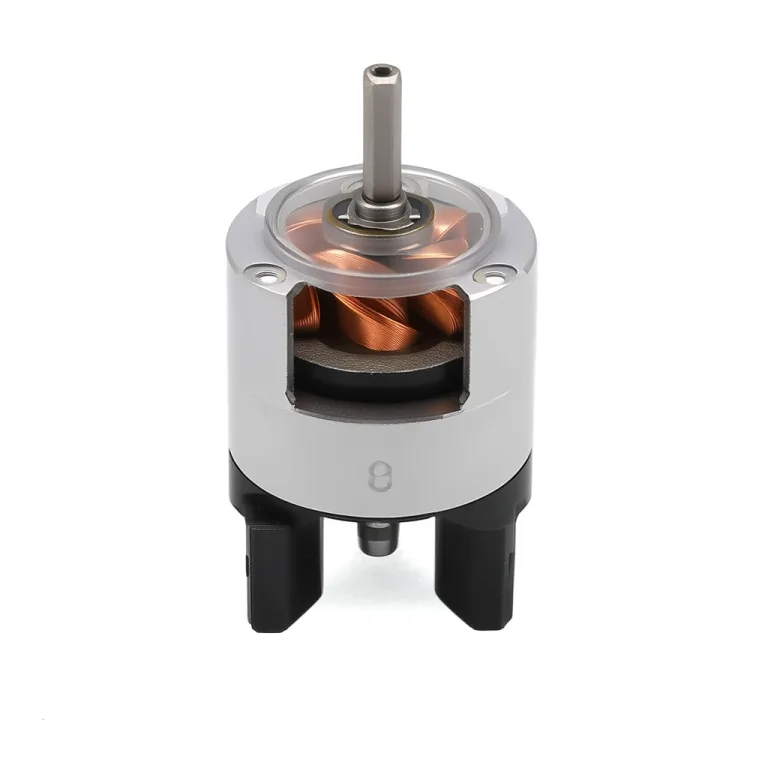
Brushless DC Motor
Brushless DC Motor for industrial applications.
About Brushless DC Motor
Brushless DC Motor for industrial applications.
| Domain | electrical |
|---|---|
| Product Family | Motors |
Who Works With Brushless DC Motor?
5 engineering roles are connected to Brushless DC Motor based on verified research evidence.
Electrical Engineer
Field Engineer
Field Engineer is a widely recognized professional role in oil & gas and industrial engineering, especially in downhole tool support. Evidence confirms SLB employs Field Engineers specifically for downhole mud motor applications—including specification, field supervision (installation/commissioning), failure analysis (troubleshooting/maintain/test), and operational optimization. While context is chemical/oilfield, 'Field Engineer' is not product-specific (e.g., not 'Mud Motor Field Engineer'), so canonical form remains generic and standardized.
Electromechanical Engineer
Electromechanical Engineer is a widely recognized professional engineering role, especially in motion control and motor-driven systems. It explicitly bridges electrical and mechanical domains — directly relevant to BLDC motor development, including electromagnetic design, thermal management, control interface, and system-level validation. Tesla’s job posting confirms its use as a bona fide title for BLDC motor system development.
Technician
Technician is a widely recognized professional role in HVAC engineering, explicitly referenced in ASHRAE guidance for cooling tower systems. While generic, it denotes a credentialed, hands-on technical role responsible for installation, commissioning, operation, inspection, maintenance, troubleshooting, and testing of HVAC equipment including cooling towers. It is not product-specific (e.g., no 'Cooling Tower Technician' prefix), so product_specific_title = false. The role is distinct from engineers or operators and falls under the Maintenance family with broad technical execution responsibilities.
Control Systems Engineer
Motion Control Engineer is a widely recognized, distinct engineering role within industrial automation, specializing in the design, integration, and validation of motion systems—including servo motors, drives, and motion networks (e.g., EtherCAT, CANopen). While 'Motion Control Engineer' includes a domain qualifier ('Motion'), it denotes a well-established specialization—not merely a product-specific title—supported by industry practice (e.g., job postings at Rockwell Automation, Bosch Rexroth, Yaskawa) and professional societies (ISA, IEEE). It generalizes to 'Control Systems Engineer' as the canonical broad role, with 'Motion Control' as a valid, accepted specialization. The role directly engages with servo motors and actuators across the lifecycle: specifying motor/drive combinations, designing motion profiles, commissioning integrated systems, troubleshooting dynamic performance issues, and validating control accuracy.