
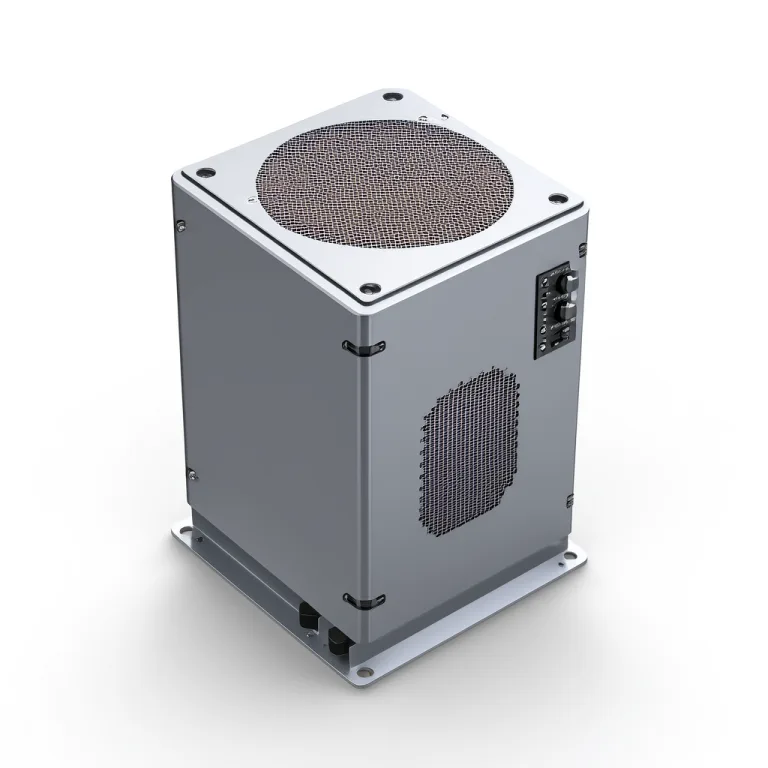
Active Harmonic Filter
Active Harmonic Filter for industrial applications.
About Active Harmonic Filter
Active Harmonic Filter for industrial applications.
| Domain | electrical |
|---|
Who Works With Active Harmonic Filter?
10 engineering roles are connected to Active Harmonic Filter based on verified research evidence.
Maintenance Technician
Commissioning Engineer
Field Service Engineer
Electrical Technician
Application Engineer
Application Engineer is a widely recognized professional role in industrial equipment domains, especially for process-critical machinery like ribbon blenders. In the beverage and food-grade context, application engineers bridge technical specifications with client process requirements — advising on equipment selection, integration, validation (e.g., mixing uniformity, cleanability), and troubleshooting. The evidence explicitly states they are part of the technical support team with food-grade system expertise, confirming their functional involvement across specification, commissioning, and support lifecycle stages.
Power Quality Engineer
Power Quality Engineer is a well-established, widely recognized engineering role within electrical power systems engineering, specifically focused on harmonic mitigation, voltage stability, flicker, unbalance, and related phenomena. The evidence confirms its direct involvement in AHF design, commissioning, and troubleshooting — core lifecycle activities for Active Harmonic Filters. While 'Power Quality' is a specialization, 'Power Quality Engineer' is a canonical, distinct professional title (not merely 'Electrical Engineer + modifier') per IEEE, CIGRE, and industry job markets.
Technical Support Engineer
Technical Support Engineer is a widely recognized professional role in engineering industries, especially in equipment-intensive domains like HVAC&R. The parenthetical '(HVAC&R)' denotes domain specialization—not product-specific title—consistent with standard industry usage (e.g., 'Technical Support Engineer (HVAC)', 'Technical Support Engineer (Power Systems)'). Evidence confirms this role directly engages with brazed plate heat exchangers through selection, sizing, and troubleshooting — core technical support functions aligned with the product context.
Reliability Engineer
Power Electronics Engineer
Power Electronics Engineer is a well-established, widely recognized engineering role specializing in the design and testing of power conversion systems—including DC-DC converters—especially in energy applications like fuel cells and battery-integrated systems. The evidence explicitly ties this role to designing, developing, and testing DC-DC converters for fuel cell systems, directly aligning with the product domain (battery-adjacent power conversion) and context (industrial Fuel Cell DC-DC Converter). It is not product-specific (e.g., not 'Fuel Cell DC-DC Converter Engineer'), so canonical form is retained.
Power Systems Analyst
Harmonic Spectrum Analyst is a domain-specific title describing a professional who performs harmonic analysis — a critical activity for sizing, specifying, and validating Active Harmonic Filters in industrial power systems. While not a standalone occupation in broad labor classifications, it is a widely recognized functional role within power quality engineering, typically performed by Power Systems Analysts or Protection & Power Quality Engineers specializing in harmonic studies. The term 'Harmonic Spectrum Analyst' reflects a task-focused specialization (harmonic spectrum analysis) rather than a generic job title; thus, canonical_role generalizes to the broader, recognized profession: Power Systems Analyst. Evidence confirms this role performs harmonic spectrum analysis as part of site surveys and commissioning support for Active Harmonic Filters.